Karyatida
Memorial to women who died in childbirth
About Karyatida
Memorial to women who died in childbirth
Throughout the world, and throughout the ages, women have died in connection with childbirth. This was also the case in the Faroe Islands, where travelling and infrastructure made it difficult to get emergency help in case of complications during labour. Most families know of stories from their past about the loss of women due to childbirth, and how these tragedies have affected their family history for generations. Times have changed, also in the Faroe Islands, which is now a modern society with good infrastructure; but the stories of women lost have helped shape our people and are worth remembering.
As in most other countries, there are many memorials in the Faroe Islands, but none commemorating the women who gave their lives for future generations.
In 2018, a working group was established with the goal of getting a memorial commemorating women, who had died in childbirth. Three women initiated the project: Brynhild Næs Petersen, culture coordinator of Fuglafjørður municipality, Anne Mette Greve Klemensen, minister of Fuglafjørður church, and Poulina Abrahamsen, midwife.
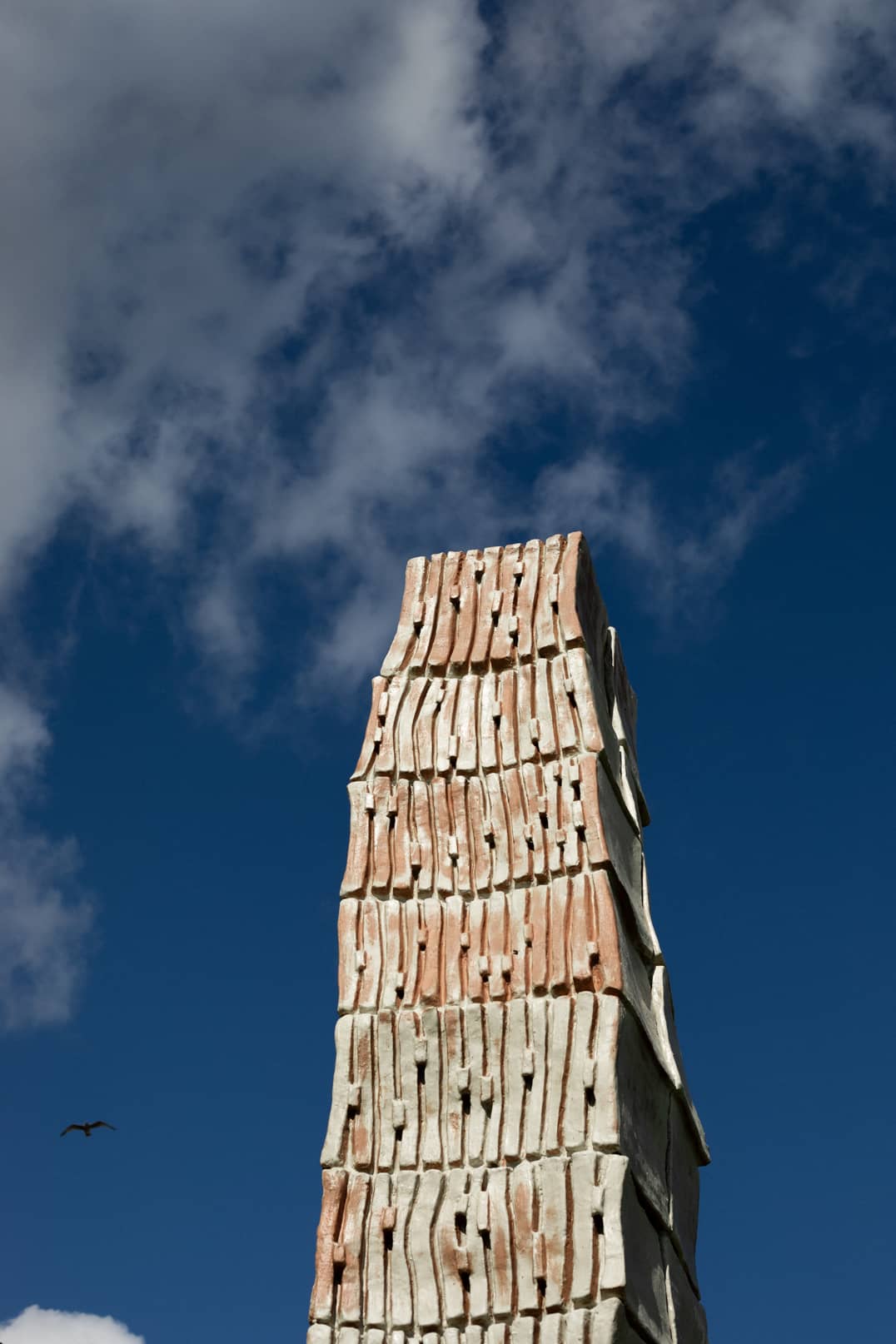
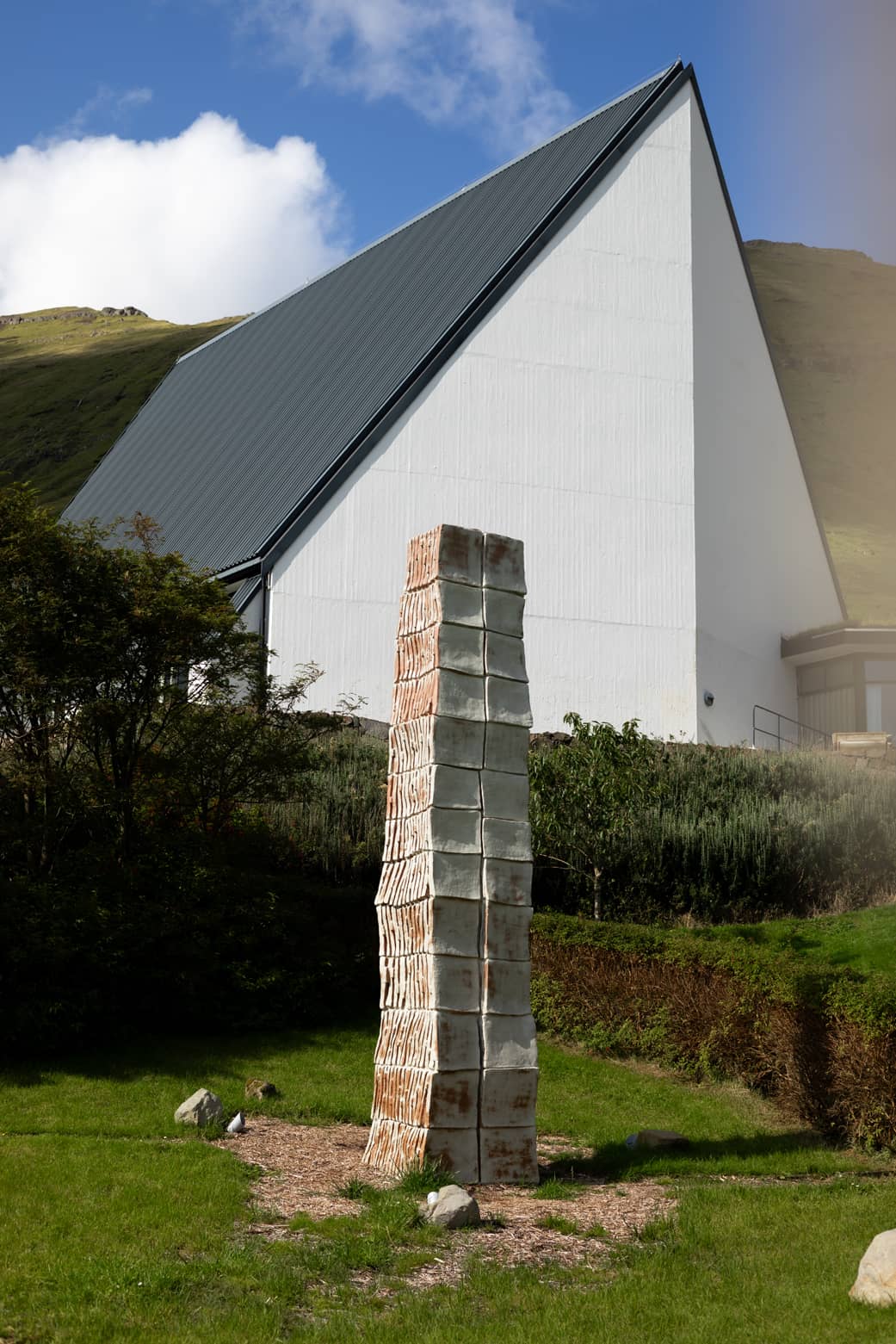
An international open call was issued, inviting artists to submit proposals for a memorial, which Guðrið Poulsen, ceramic artist, won with her idea for Karyatida. Karyatida is inspired by the Caryatides known from Greek mythology and architecture, and represents the strength of a supporting column or pillar.
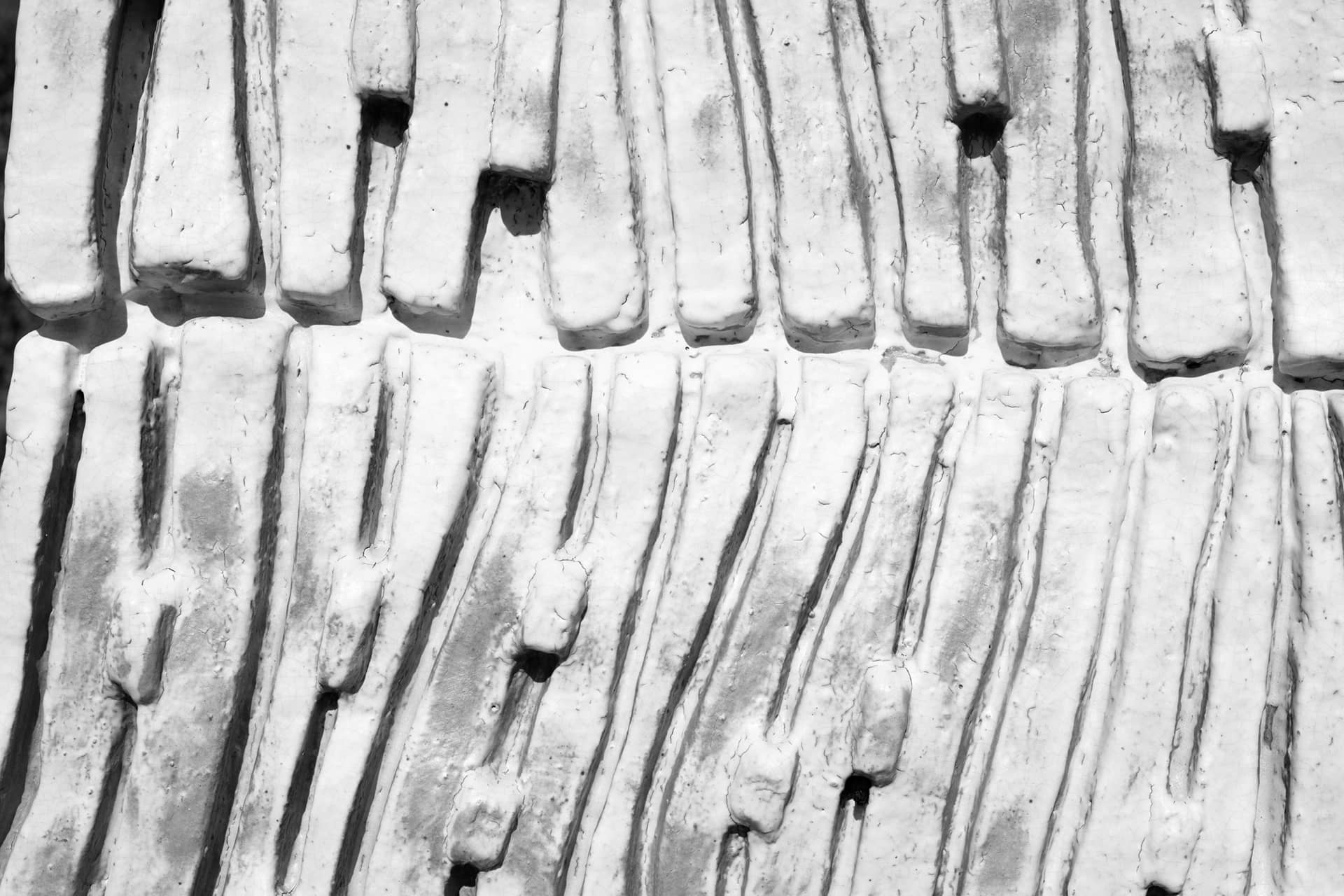
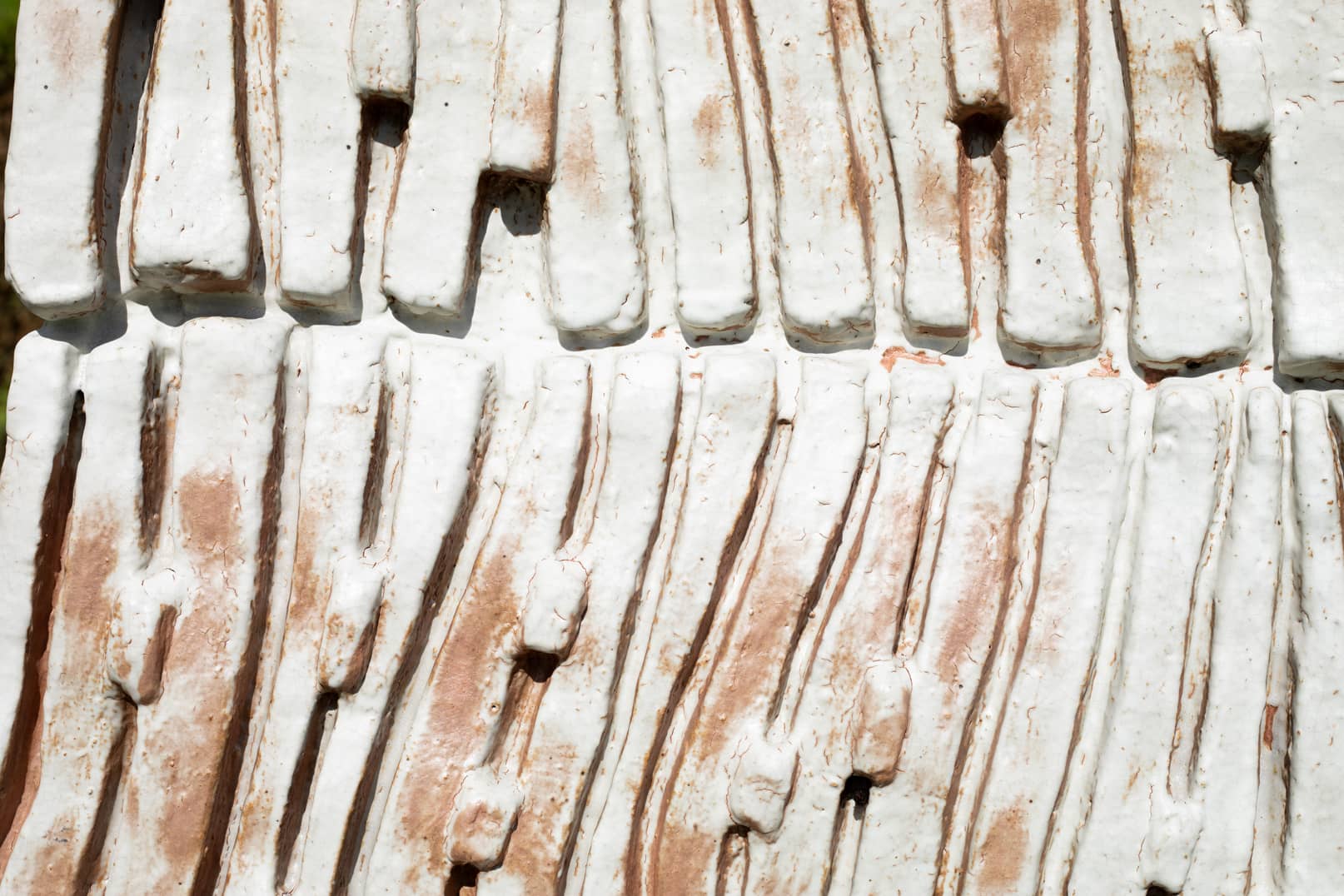
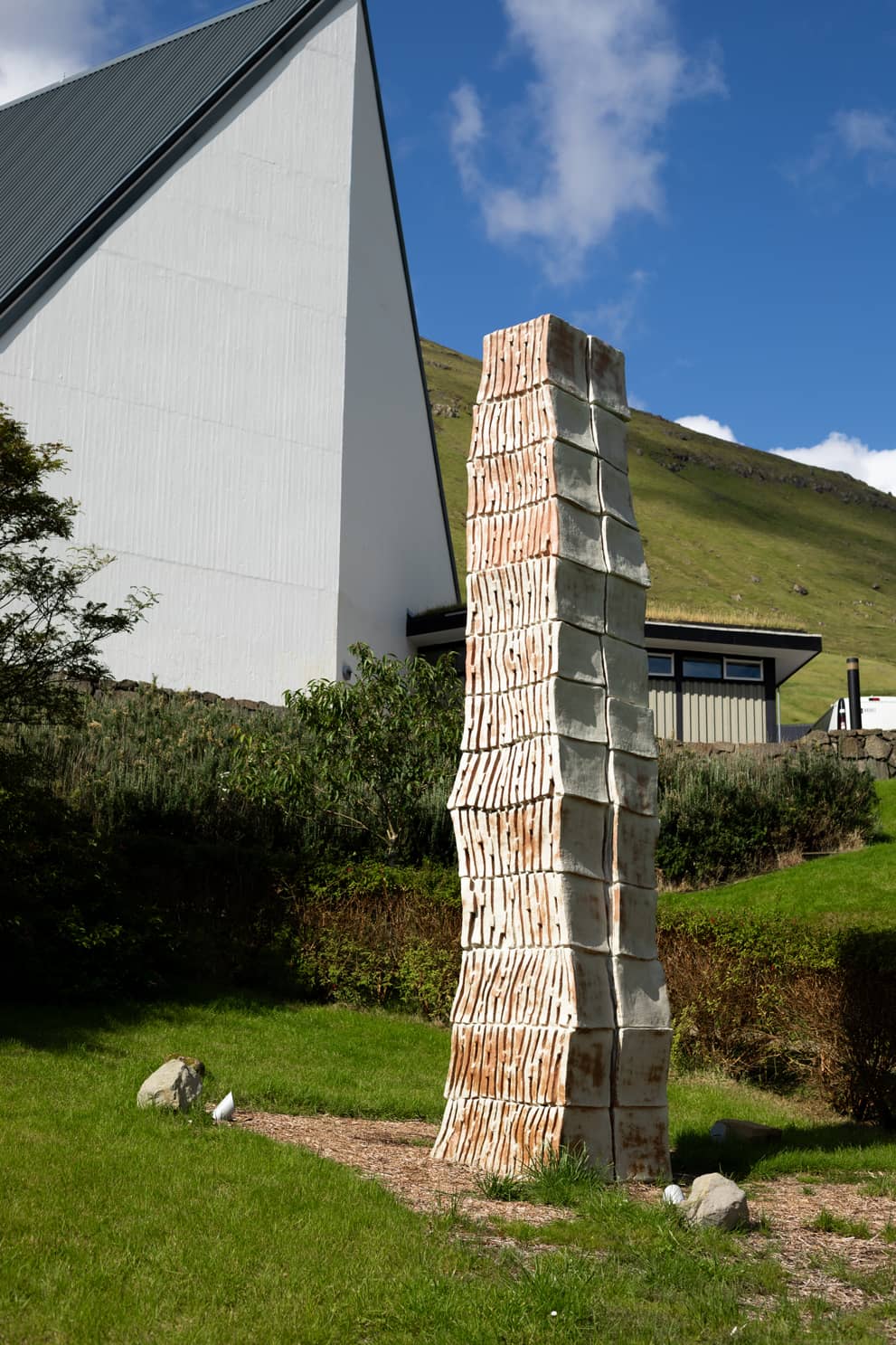
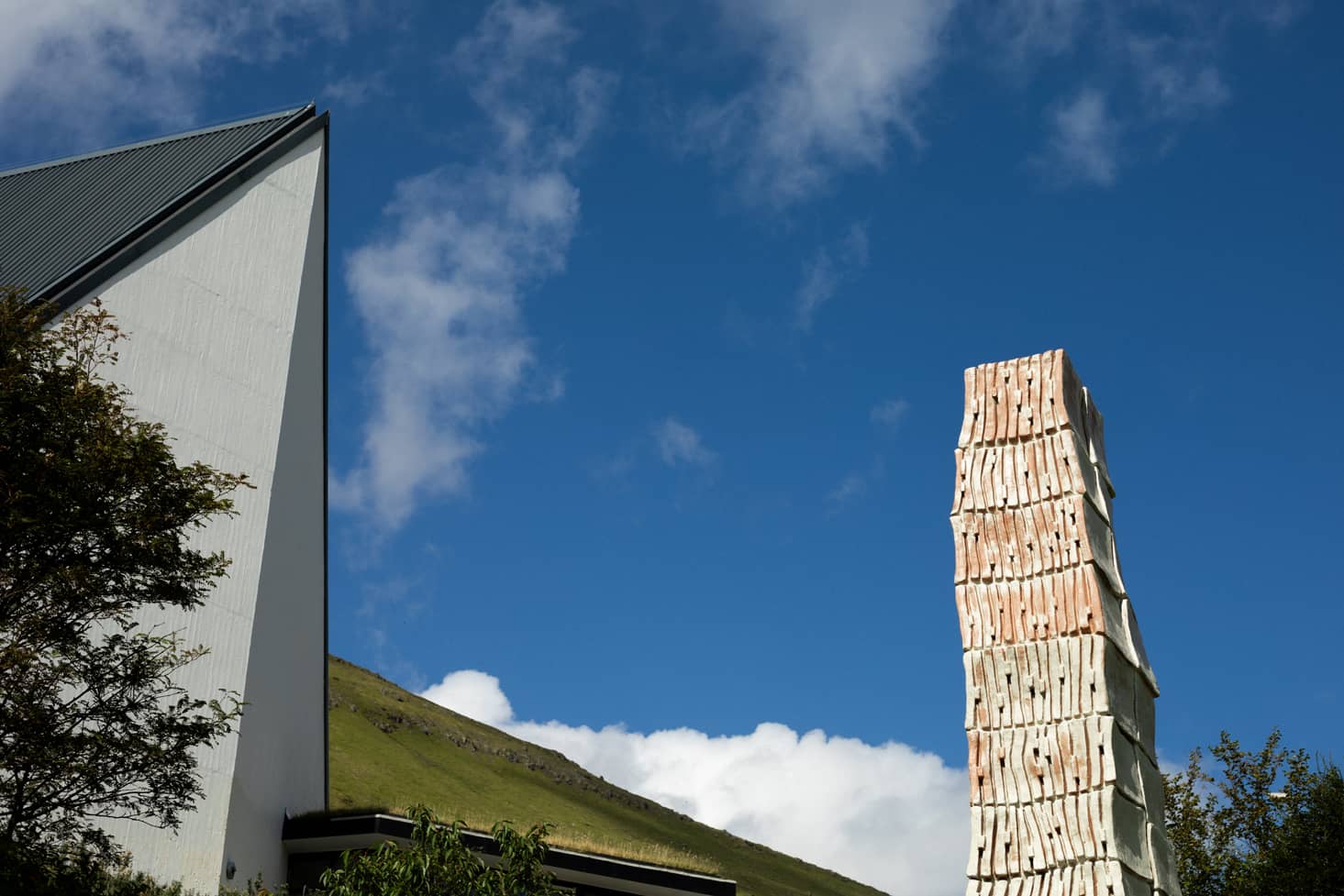
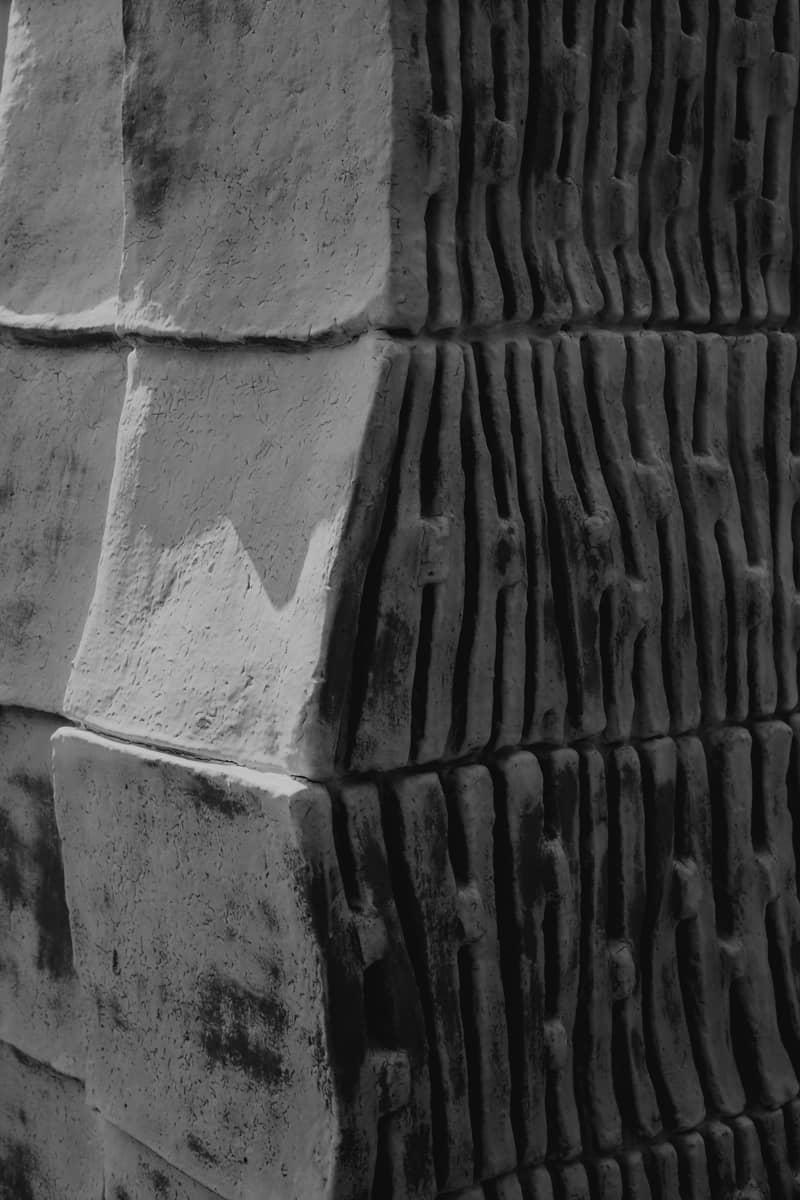
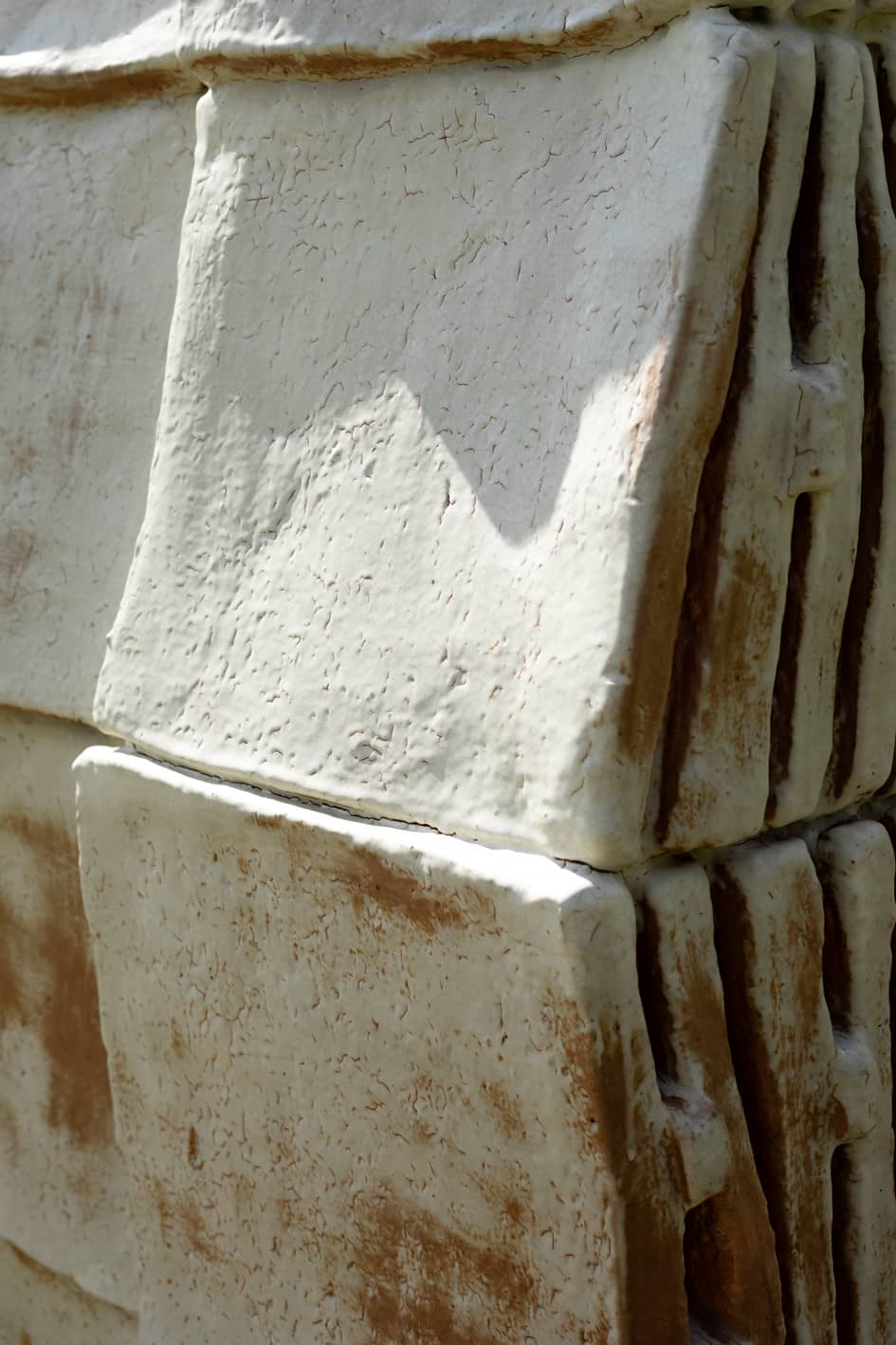
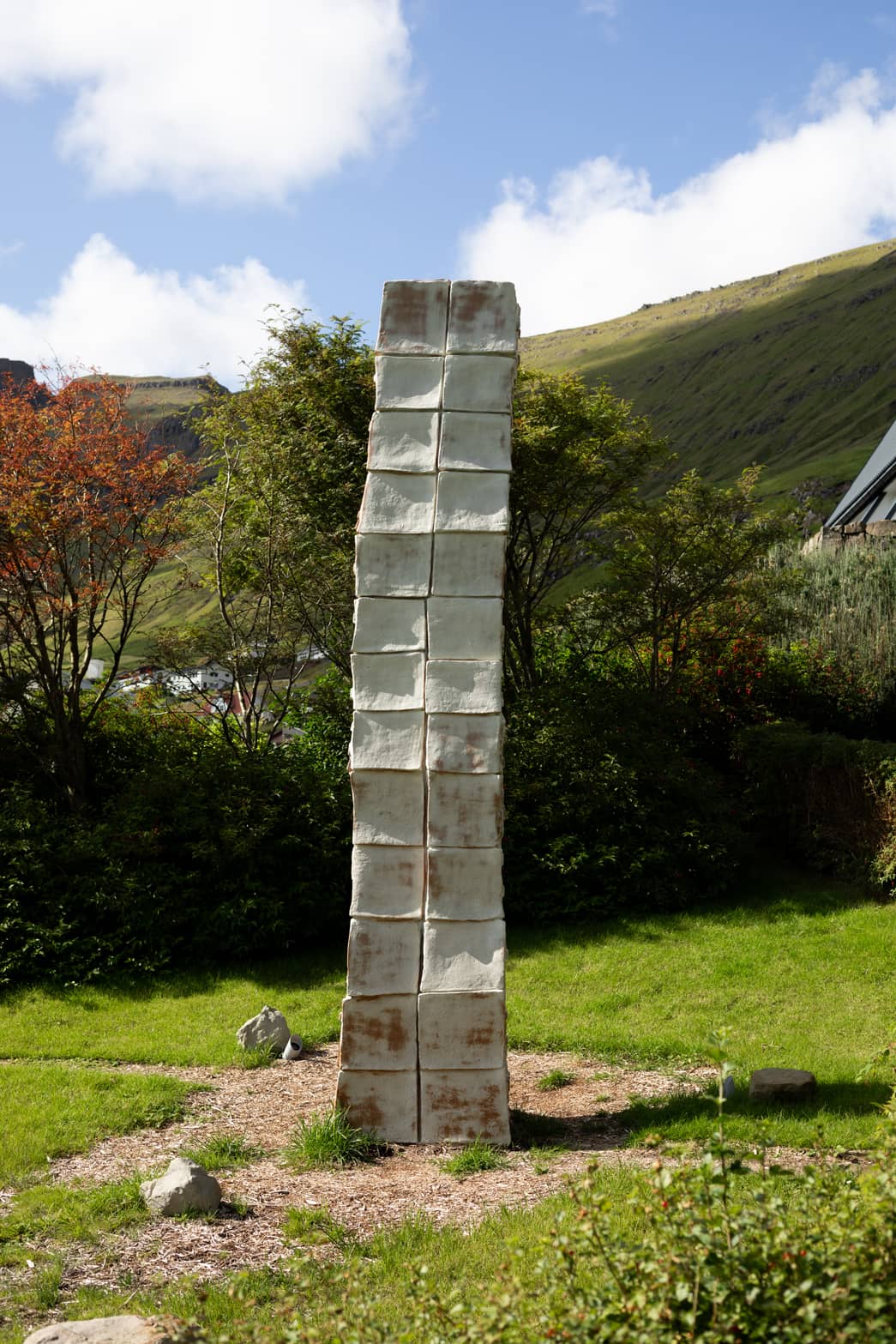
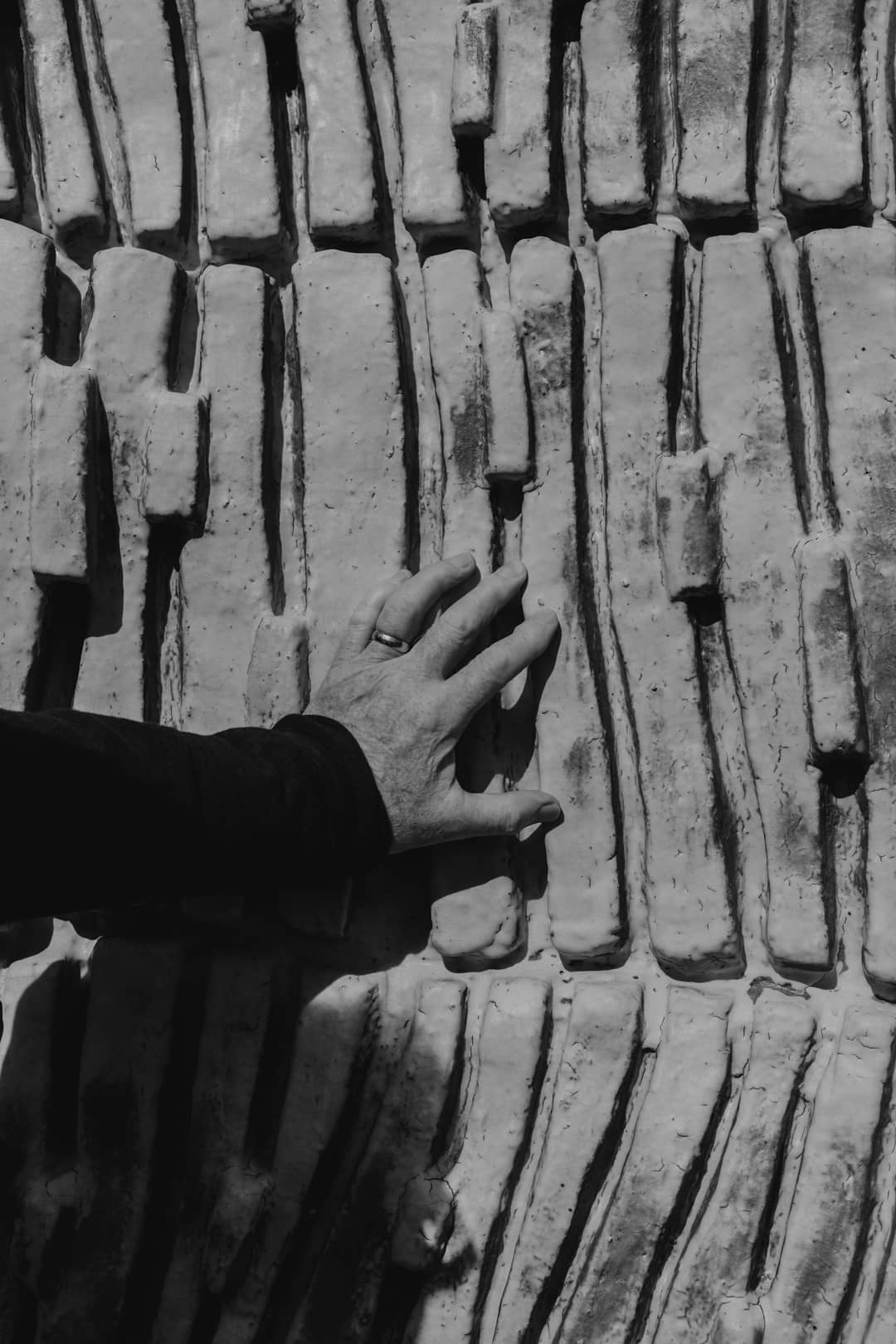
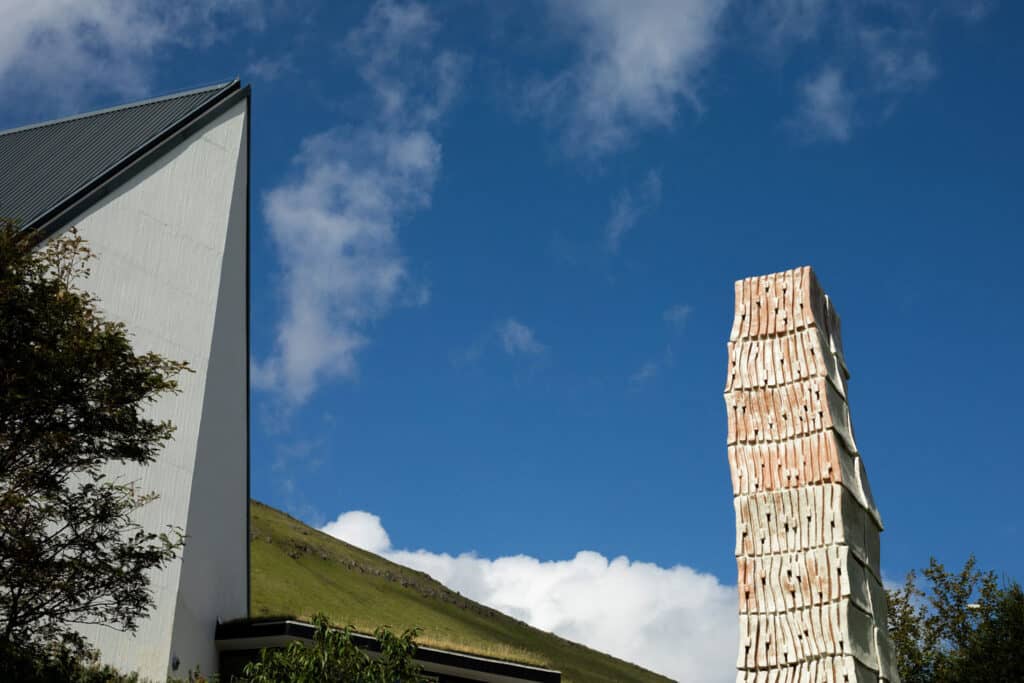
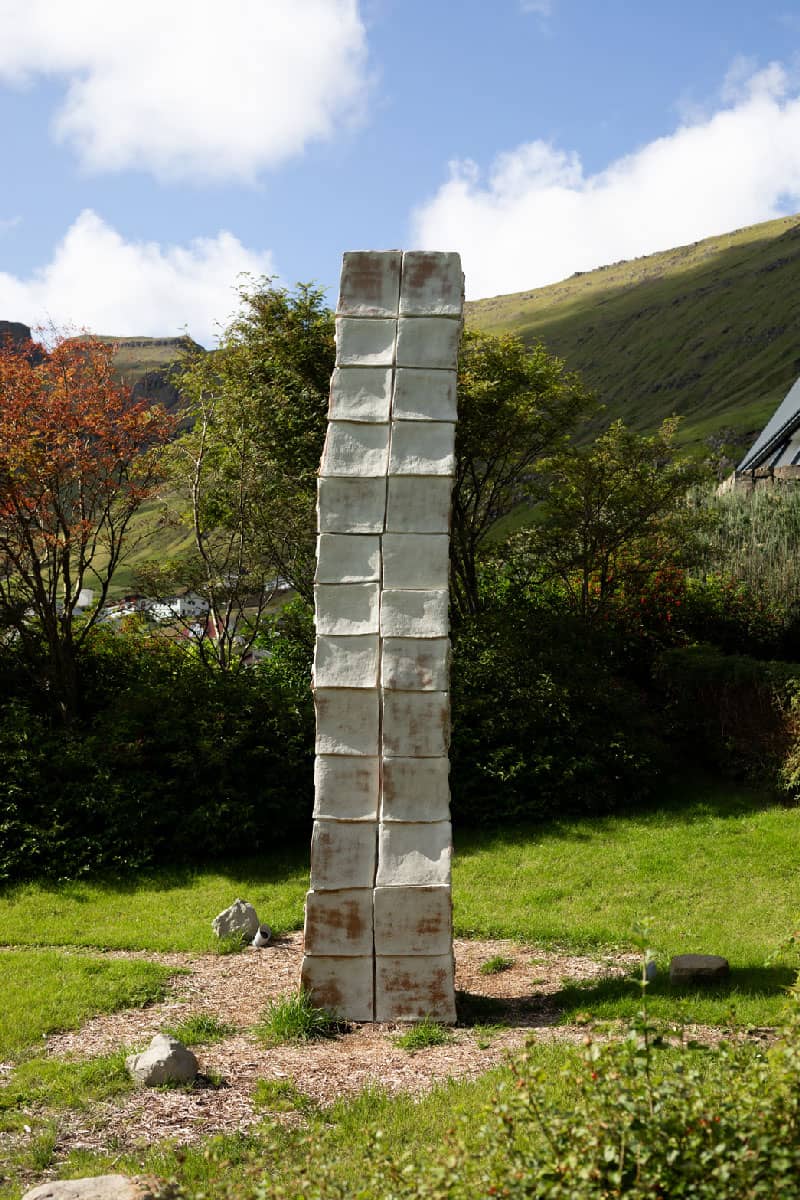
Made from clay and fired at Tommerup Ceramic Workshop in Denmark, Karyatida stands five metres tall and weighs four tonnes.
Karyatida was erected in the central park of Fuglafjørður and was unveiled on 17 December 2023.
The memorial was financed through public and private donations from around the country.
The artist
Guðrið Poulsen, ceramic artist
Born 1961
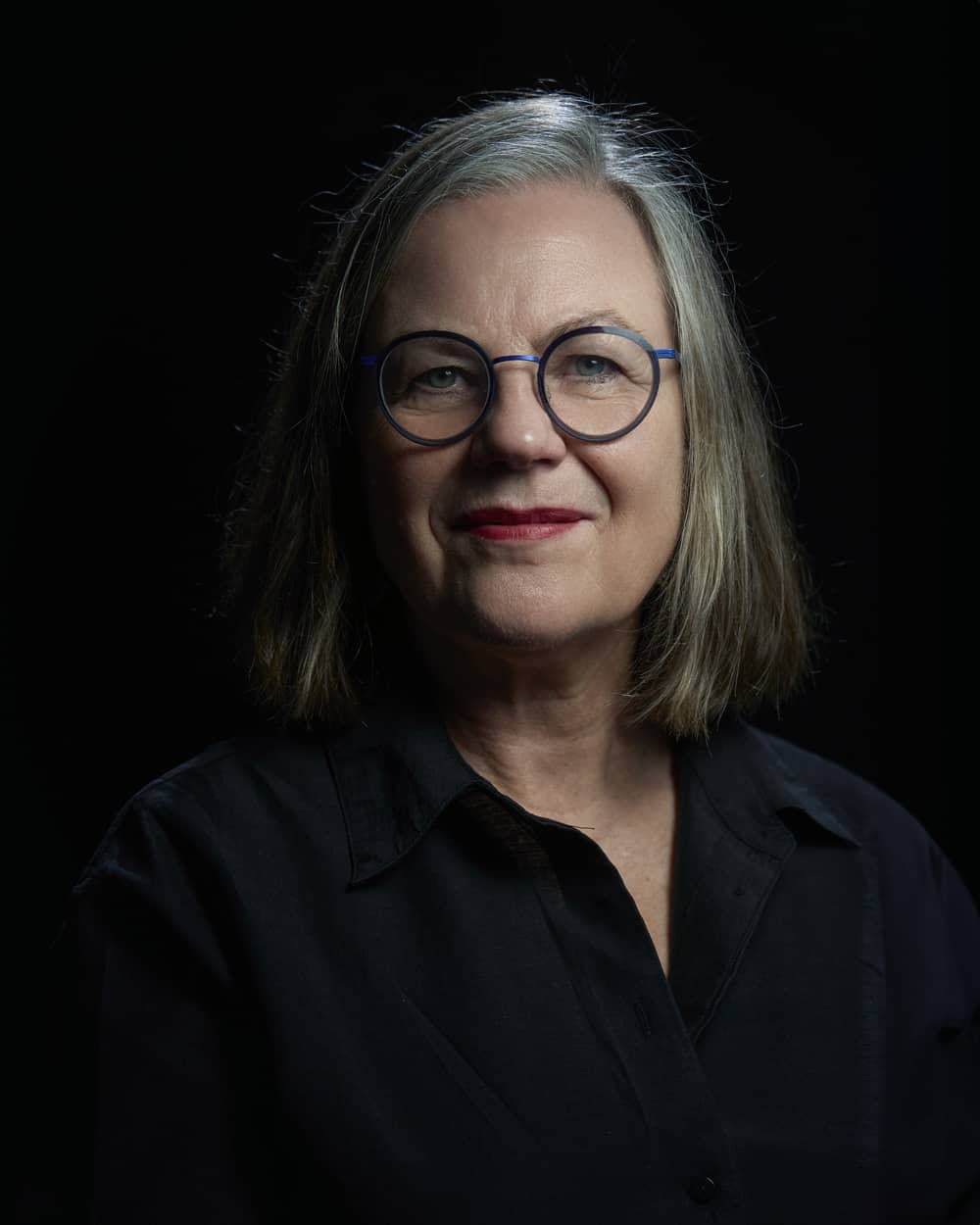
Guðrið Poulsen, the ceramic artist who created the Karyatida, reflects on the origin of her artwork:
There is a small temple called Erechteion on the Acropolis of Athens, dedicated to Erechtheus. One part of the temple is a porch whose roof is carried by six women, the Caryatids, instead of regular pillars. Standing in the classical position with the weight on one leg, they are dressed in garments which fall into deep folds, a decorated basket on their head making the capital – the top of the pillar. The Caryatids are a personification of the supporting strength of a pillar.
In Greek mythology, the Caryatids are the young women from Karyai. The Caryatids carried baskets on their heads while dancing around Artemis, the goddess of childbirth.
The statue is rooted in the idea of the pillar. Karyatida represents the abstract shape of a woman and the tangible space she occupies in the world. The pillar rises like the trunk of a tree straight from the grass like the trees in the park around the church. The statue is an abstract entity against the white wall of the church. It is democratic in the sense that it is a gestalt, a physical figure among us, on our level with no pedestal.
The memorial is also important for our present, our future, and our youth. It will teach them to bring history into the creation of their future. We are also shaped by our origin.
Sirið Stenberg, Minister of Welfare and Culture, in her speech at the unveiling of the memorial
An innovative work of art both regarding subject matter, form and material as this is the first monumental abstract ceramic statue in the Faroe Islands.
Kinna Poulsen, Listaportal.com
statistics and context
Maternal mortality
Statistics
From 1870 – 1899 there were around 900 cases of childbirth related deaths for every 100,000 liveborn in the Faroe Islands.
In 2017, in contrast, there were four cases of childbirth related deaths in Denmark and two cases in Norway for every 100,000 liveborn.
In 2017 in southern Sudan, 1,150 women died in childbirth for every 100,000 live births.
Through strategic campaigns from year 2000 – 2017, the African country Rwanda succeeded in reducing maternal mortality from 1,160 deaths to 248 deaths for every 100,000 live births.
(source: Tær góvu lív (They gave their life), Rigmor Restorff Dam, 2024)
Related links
WHO’s website on the topic of maternal mortality: https://www.who.int/news-room/fact-sheets/detail/maternal-mortality
UNICEF figures on maternal mortality:https://data.unicef.org/topic/maternal-health/maternal-mortality/
Góða mamma (Dear mother)
Faroese TV documentary about losing ones mother in childbirth:
https://kvf.fo/sjon/sending/goda-mamma?sid=199506